

Key Takeaways
- Early adopters of HR automation focus on areas where the payoff is clear, like managing HR reporting and analytics.
- Common pitfalls include lack of reliable data, infrastructure issues, and automating the wrong workflows, which can undermine efforts.
- A solid foundation, including process standardization and change management strategies, is crucial before adopting automation technology.
- Mature HR teams spend less time on transactional tasks, enabling them to provide a better employee experience and drive business value.
- Continuous improvement loops and tracking progress help HR teams enhance automated processes and build trust in future projects.
As human resource (HR) departments increasingly look to technology to drive efficiency and value, early adopters of automation are blazing the trail. These trailblazers have pinpointed where automation offers the most significant benefits and have navigated potential pitfalls with strategic foresight. In this blog post, we’ll explore the critical areas early adopters focus on, common challenges they face, and the foundational steps necessary for successful HR automation.
Insights from Early Adopters: Where Automation Delivers
Focus Areas for Immediate Impact
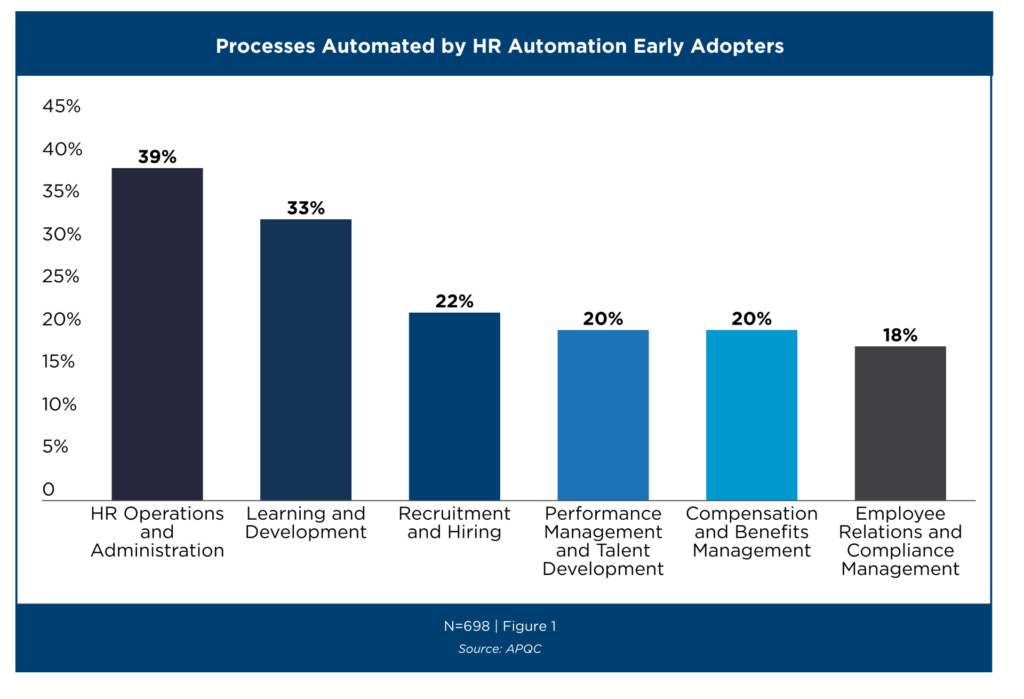
Early adopters of HR automation wisely focus on areas with clear immediate benefits. By starting where the return on investment is significant, they ensure that their automation initiatives quickly transition from concept to value-enhancing processes. Notable focus areas include:
- HR Reporting and Analytics: Automating these functions can provide real-time insights and significantly reduce manual data handling.
- Learning and Development: Tools that automate training and learning analytics allow HR teams to tailor programs that directly impact workforce productivity and engagement.
- Performance Management: By utilizing predictive analytics and automating feedback mechanisms, HR departments can create more effective and responsive talent management frameworks.
Overcoming Common Pitfalls in HR Automation
Challenges to Navigate
While the potential of HR automation is vast, early adopters have encountered challenges that can undermine their efforts if not strategically managed:
- Lack of Reliable Data: Automation is only as effective as the data it processes. Inconsistent or incomplete data can lead to erroneous outputs and frustrated stakeholders.
- Infrastructure Issues: Existing systems may not support new automation tools, causing integration headaches and inefficiencies.
- Automating the Wrong Processes: Not all processes are ripe for automation. Emphasizing low-value or poorly designed workflows can lead to suboptimal results and missed opportunities.
Building a Solid Foundation for Automation
Strategic Groundwork
A solid foundation is paramount for automation success, as articulated by pioneers in the field. Key aspects include:
- Process Standardization: Prioritizing the streamlining and standardization of processes prepares organizations for the scalability of automation.
- Change Management: Developing strategies to manage the transition effectively ensures that staff are well-prepared and supportive of automation initiatives.
By focusing on these areas, HR functions can transition from being mere operational support to becoming strategic partners that drive business value.
The Importance of Continuous Improvement
Feedback Loops and Monitoring
Early adopters of HR automation emphasize the importance of continuous improvement. By establishing robust feedback loops and consistently monitoring and analyzing automated processes, HR teams can ensure ongoing enhancements and build stakeholder trust.
Incorporating methodologies for continuous improvement not only helps in refining existing systems but also paves the way for adopting new technologies smoothly and efficiently.
The Future of HR Automation
HR automation represents a strategic advantage for organizations willing to embrace and adapt to it thoughtfully. By learning from early adopters, others can avoid pitfalls and start their automation journeys on a strong footing. The key to successful automation lies in identifying high-value opportunities, addressing foundational challenges early, and maintaining a culture of continuous improvement.
By strategically implementing automation, HR departments can enhance their roles within organizations, ultimately driving better business outcomes and creating more dynamic and satisfying employee experiences.